

No More Full Days of Classroom Instruction, Let Them Cook!

Updated: Sep 20

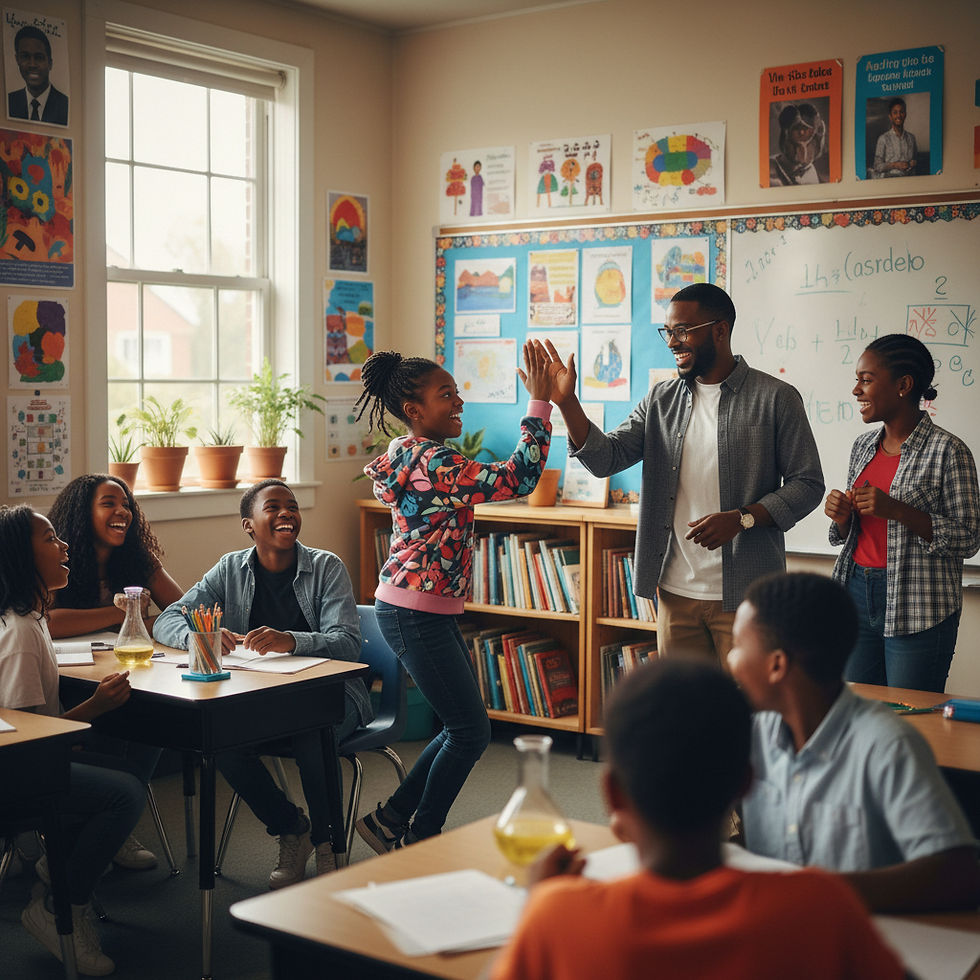
Two years ago, I taught at a summer school. Like most summer programs, students attended to recover credit for classes they failed during the regular school year. The structure was simple: the first half of the day focused on academics, while the second half was dedicated to engaging, hands-on experiences. Students had access to the gym and computer lab, and vendors were brought in to offer classes in creative arts and provide STEM-related activities. The shift in energy was undeniable. Students were engaged, curious, and—most importantly—present.
One moment, in particular, stood out. During the 3rd or 4th day of classes, a student who was not even on my roster showed up to class. When I asked if he was in the right place, he told me a friend had shared “what they was doing,” and he was so interested that he asked the principal if he could join—despite not being required to attend summer school at all. That moment reinforced something I have long believed: students are not disengaged because they don’t want to learn—they are disengaged because of how we ask them to learn.
So, the question becomes unavoidable: Why do we wait until students fail to offer them a model of learning that actually works? Why is this blended approach reserved for remediation instead of being implemented during the regular school year to prevent failure in the first place?
When I say "let them cook," I am referring to the type of learning model that allows students to use the information received during instruction (1st half of the school day) in meaningful ways(during the second half of the school day), in order to facilitate real learning.
Research affirms what many educators witness daily. A RAND Corporation study found that summer programs combining academics with enrichment activities improved both attendance and academic outcomes compared to traditional models (McCombs et al., 2020). Similarly, How People Learn (National Academies) emphasizes that students retain knowledge more effectively when they actively construct understanding through experience rather than passive instruction (Bransford, Brown, & Cocking, 2000). Yet most public schools still operate using outdated models that prioritize seat time over meaningful engagement, and compliance over connection to real-world experiences.
Effective teaching and learning thrive in environments where educators have the flexibility to use strategies that unlock the curiosity, creativity, and genius within every student. But that kind of environment cannot exist within a rigid, one-size-fits-all instructional model.
Students learn best when they are actively engaged in the learning process. And if we are honest, our current system—by and large—is not engaging. If we truly care about student success, then we must do more than acknowledge the problem—we must be bold enough to change the model.
No more full days of passive classroom instruction. We must redesign the regular school day in a way that reflects how students actually learn. Otherwise, public schools will continue to operate as warehouses—places where students are managed rather than inspired to learn.
It’s time to change the way school is done!


Comments